Lacoste Men's Classic Fit Original L.12.12 Polo, 1933 · The originator, still made
Materials
100% recyclable materials, including FSC-certified sustainably sourced pulp.Bags can be reused or fully recycled through standard household paper recycling.Returns PolicyReturns accepted within 14 days of receipt.Size & FitOur signature profile. Standard Fit is clean, balanced, and quietly refined, · Impact not scored
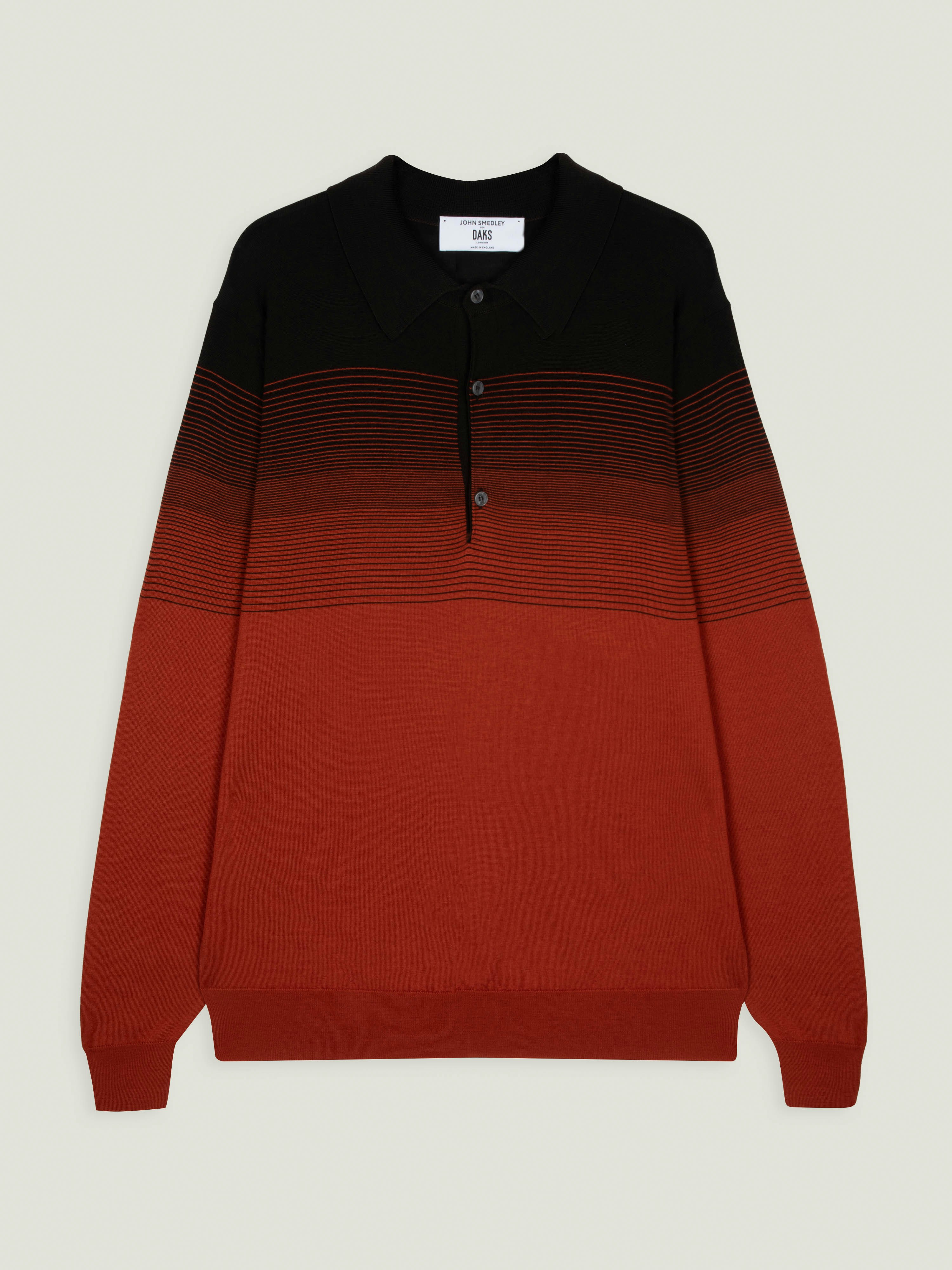
John Smedley's piqué polo shirt in 100% recyclable materials, including fsc-certified sustainably sourced pulp.bags can be reused or fully recycled through standard household paper recycling.returns policyreturns accepted within 14 days of receipt.size & fitour signature profile. standard fit is clean, balanced, and quietly refined,, patterned on the Lacoste Original L.12.12 polo of 1933. It differs from the Original L.12.12 polo in the short buttoned placket, short sleeves with ribbed bands and embroidered chest emblem: a three-button placket, long sleeves with ribbed cuffs and a plain chest; the cotton piqué knit, ribbed knit collar and side vents and longer back hem cannot be made out. The listing says nothing about construction and does not say where it is made.
Reference · the Lacoste Original L.12.12 polo
René Lacoste, a French tennis champion, wanted something cooler and less restrictive than the long-sleeved woven shirt players then wore; by his own company's account he first played in a short-sleeved knitted shirt in the 1928 French championship final (other accounts cite the 1926 US Championships). In 1933, retired from the game, he founded a company with André Gillier, owner of one of France's largest hosiery firms, and the shirt went into production at Gillier's factory in Troyes in a new knitted cotton the two called "petit piqué". The embroidered crocodile came from Lacoste's nickname, given by the American press in 1923; Lacoste claims it as the first logo worn on the outside of a garment. The model was coded L.12.12: L for Lacoste, 1 for petit piqué, 2 for short sleeves, 12 for the twelfth prototype.
How the Piqué polo shirt changed, 1920s-1930s to present
1920s–1930sRené Lacoste plays in a short-sleeved knitted shirt (1928 French final by Lacoste's account; 1926 US Championships by others) and in 1933 founds a company with the hosier André Gillier to make it. The shirt is white; the first coloured polos appear in 1951.
1950sLacoste's shirt is sold in the United States under licence to Izod from the early 1950s. Fred Perry launches his own white piqué shirt at Wimbledon in 1952 with partner Tibby Wegner, with the laurel wreath on the chest; the twin-tipped M12 follows in the 1950s.
1960s–1970sFred Perry's shirt becomes part of mod and then skinhead dress in Britain. In 1972 Ralph Lauren sells a tennis shirt under his Polo label in a wide range of colours and markets it as a "polo shirt"; that name overtakes "tennis shirt".
1980s–presentThe polo becomes a staple of preppy and casual dress, of golf club dress codes and of workplace uniforms. Slim fits, cotton/polyester blends and all-synthetic "performance" piqué become common below the heritage tier; Lacoste's L.12.12 and Fred Perry's M12 stay in their original cloth and cut.
Cotton piqué knitUnclear
The listing does not say, and the cotton piqué knit cannot be made out.
A knitted cotton with a fine raised, honeycomb-like surface. The open texture lets air through and holds the fabric off the skin when wet, which was the point for tennis. Lacoste's "petit piqué" is the original and is still knitted at Troyes.
No clear viewLacoste Original L.12.12 poloNo clear viewThis product
Ribbed knit collarUnclear
The listing does not say, and the ribbed knit collar cannot be made out.
A soft flat-knit ribbed collar that lies unstarched at the neck and can be turned up against the sun. It replaced the stiff woven collar of the shirts tennis players wore before it.
No clear viewLacoste Original L.12.12 poloThis product · photo: John Smedley
Short buttoned placketDiffers
The Lacoste Original L.12.12 polo has a two-button placket; this product has a three-button placket.
A short front opening with two buttons on the original (three on many later versions), so the shirt pulls on over the head. Lacoste still uses mother-of-pearl buttons, borrowed from traditional men's shirts. Every button on the placket counts, the top one at the collar included: two buttons below a button at the collar make a three-button placket. A listing may count them another way; this is how Docent counts.
No clear viewLacoste Original L.12.12 poloThis product · photo: John Smedley
Short sleeves with ribbed bandsDiffers
The Lacoste Original L.12.12 polo has short sleeves with ribbed bands; this product has long sleeves with ribbed cuffs.
Short sleeves finished with a ribbed knit band that sits close to the arm without restricting the swing. Lacoste's own description is "ribbed collar and sleeves".
No clear viewLacoste Original L.12.12 poloThis product · photo: John Smedley
Side vents and longer back hemUnclear
The listing does not say, and the side vents and longer back hem cannot be made out.
Short splits at the side seams give room at the hip. The tennis shirt was also cut longer at the back than the front, the "tennis tail", so it stayed tucked during play; Lacoste's current L.12.12 keeps the side splits.
No clear viewLacoste Original L.12.12 poloThis product · photo: John Smedley
Embroidered chest emblemDiffers
The Lacoste Original L.12.12 polo has an embroidered emblem on the chest; this product has a plain chest.
A small embroidered emblem on the left chest. Lacoste's green crocodile, which the company claims as the first logo worn on a garment, made the emblem part of the archetype; Fred Perry's laurel wreath and Ralph Lauren's polo player followed.
No clear viewLacoste Original L.12.12 poloThis product · photo: John Smedley
Construction
Expected at this price2 detailsWhat a piqué polo shirt should state
Stated by the listing0 of 2Nothing on seams, tacks or finishing
What it does sayNothingNo construction or feature claims
A well-made Piqué polo shirt usually has overlocked (serged) seams, linked seams (fully fashioned knitwear); the listing does not say. Silence is not a verdict: a maker that does these things usually says so, and each can be checked in a minute with the product in hand.
Overlocked (serged) seams
Listing: not stated
A seam whose raw edges are finished with a dense looping thread stitch from an overlock machine, which trims and wraps the edge in one pass.
What it tells you
The fastest and cheapest seam finish and the industry default across most price points, including some expensive garments. Not a flaw by itself; what matters is where it is used. On knits it is the correct finish. On a jacket's interior or a shirt's side seams it indicates the maker chose speed over a bound, felled, or French finish.
How to check it yourself
Inside the garment, look for a dense band of zigzag or looping thread wrapping the raw edge of each seam allowance.
Linked seams (fully fashioned knitwear)
Listing: not stated
Knitwear whose panels are knitted to shape (fully fashioned) and joined stitch by stitch on a linking machine, so the seam is a row of knit loops rather than a cut edge sewn and overlocked.
What it tells you
Shaped panels waste less yarn and the linked seam lies flat and stretches with the knit. This is the construction of better fine-gauge knitwear and the main thing a cut-and-sew sweater saves on. Visible fashioning marks at the raglan or armhole are the sign of a shaped panel.
How to check it yourself
Turn a seam inside out. A linked seam is a narrow, flat row of loops with no overlocked thread edge. At the armhole or shoulder, look for small stepped marks (fashioning marks) where stitches were decreased.
Composition and materials
100% recyclable materials, including FSC-certified sustainably sourced pulp.Bags can be reused or fully recycled through standard household paper recycling.Returns PolicyReturns accepted within 14 days of receipt.Size & FitOur signature profile. Standard Fit is clean, balanced, and quietly refined,As the listing states it
100% recyclable materials, including FSC-certified sustainably sourced pulp
Composition, as listed: “100% recyclable materials, including FSC-certified sustainably sourced pulp”. Which part of the product the figure covers is not said; Docent treats it as the shell. unresolved-fiber.
Beside the original
Lacoste Men's Classic Fit Original L.12.12 Polo: 100% cotton petit piqué.
This product: 100% recyclable materials, including FSC-certified sustainably sourced pulp.Bags can be reused or fully recycled through standard household paper recycling.Returns PolicyReturns accepted within 14 days of receipt.Size & FitOur signature profile. Standard Fit is clean, balanced, and quietly refined,; which part it covers not stated.